
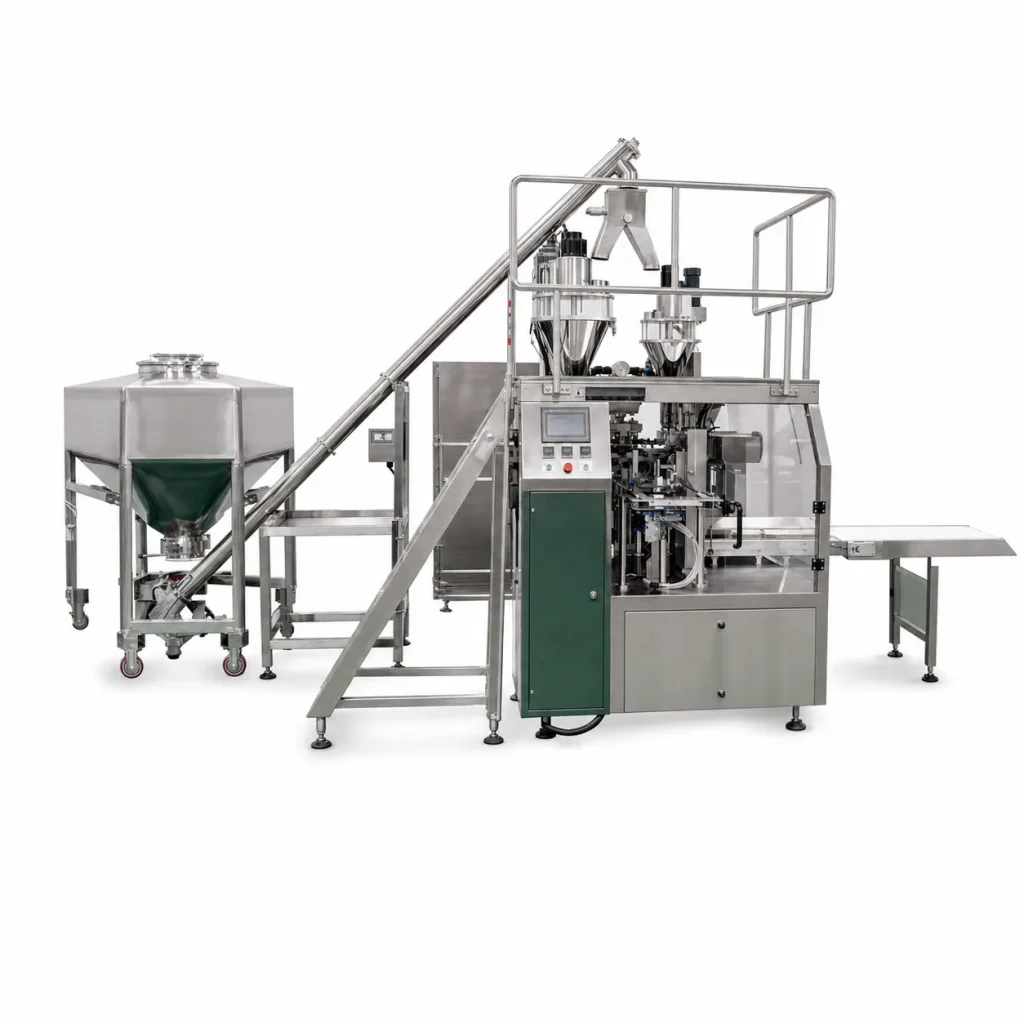
AT-GD8-400-2FCZ Premade Pouch Powder Packing Machine — Dual-Head
AT-GD8-400-2FCZ is a dual-weighing-head powder packing machine for larger premade-pouch applications.
View details →Equipment by application
AT-GD8-400-2FCZ is a dual-weighing-head powder packing machine for larger premade-pouch applications.
View details →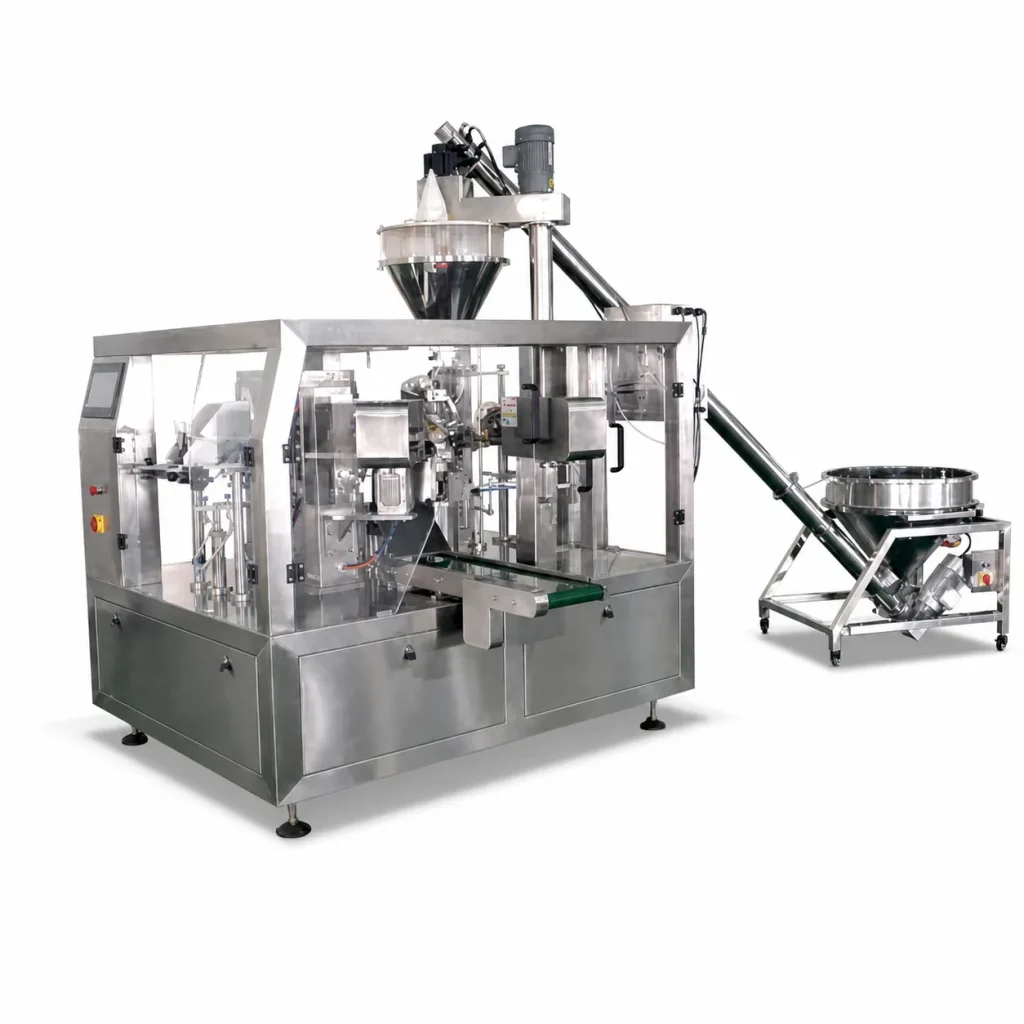
AT-GDF-200A is a rotary powder packing machine using premade pouches. Filling / weighing range: 5-1500G.
View details →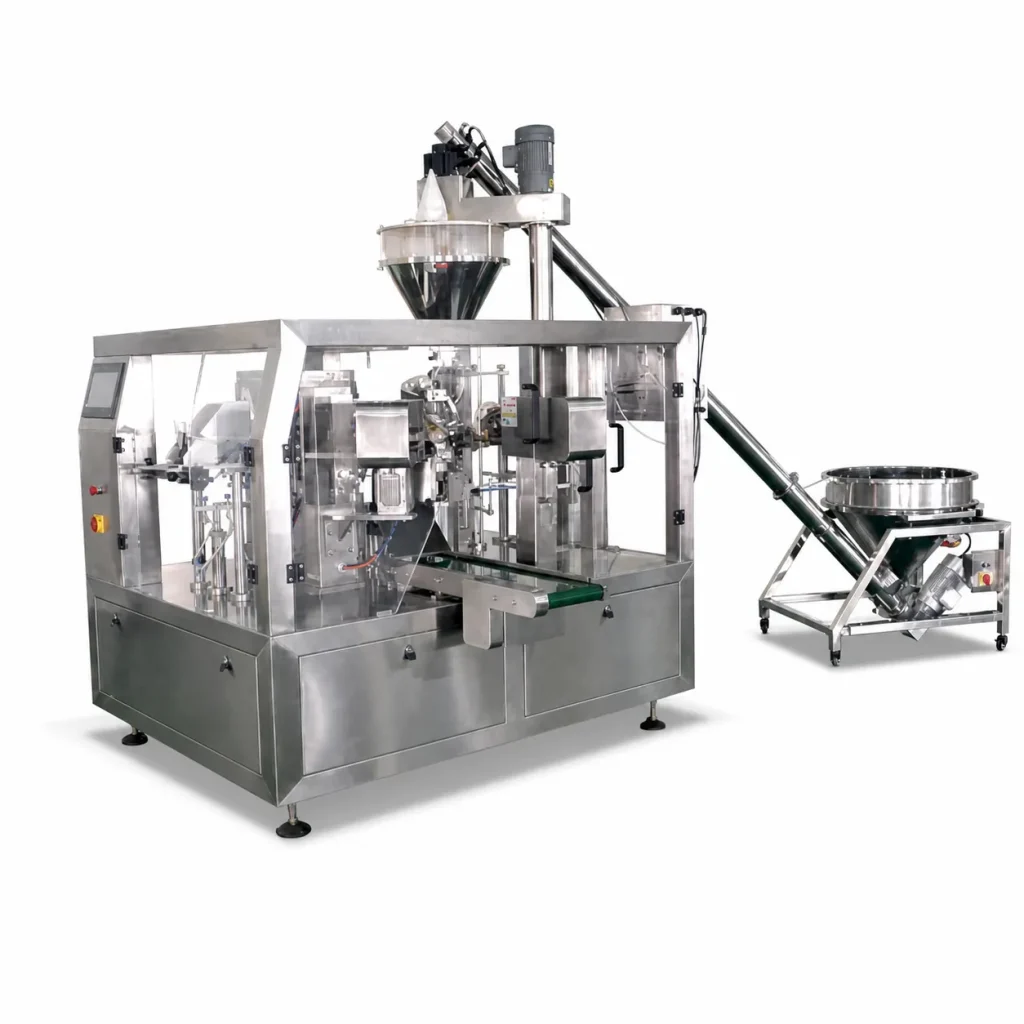
AT-GDF-260A is a rotary premade-pouch powder packing machine. Filling / weighing range: 100-2000G.
View details →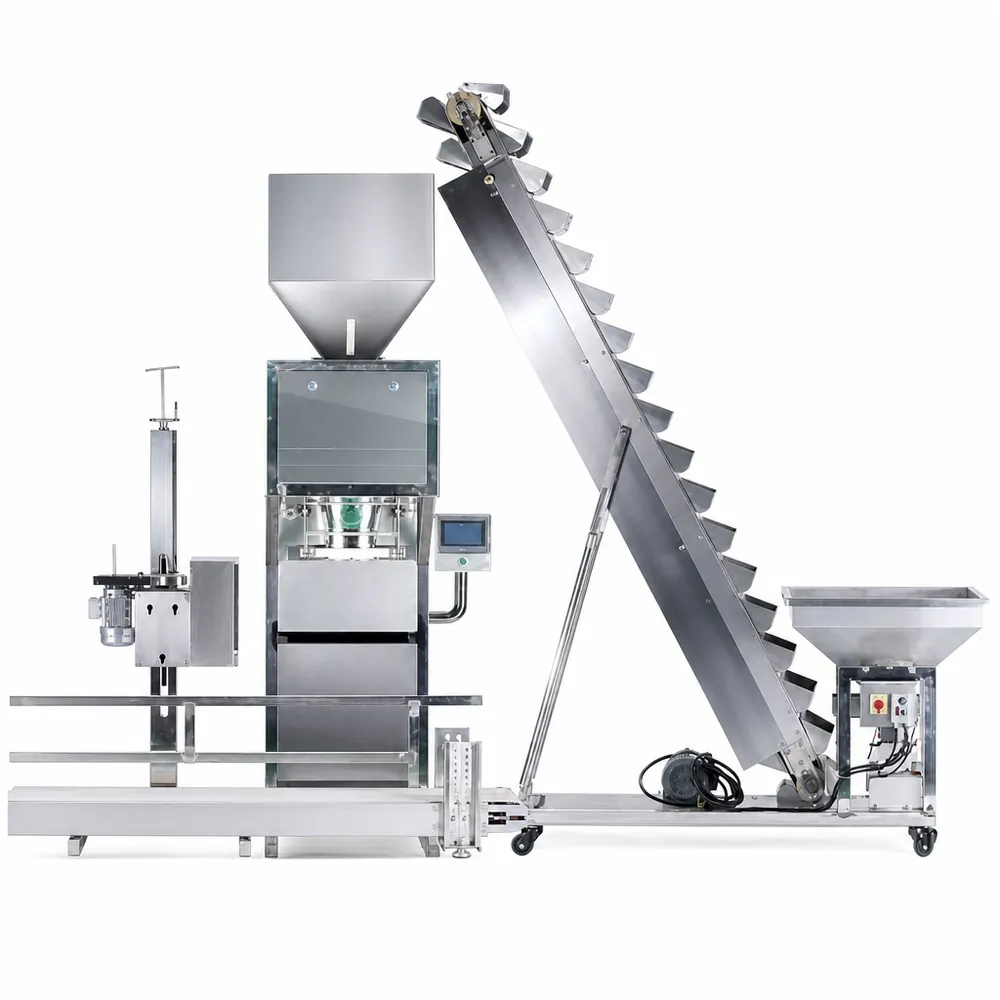
H-A25 is a large-bag powder packing machine with double-screw feeding and a bag-handling workflow.
View details →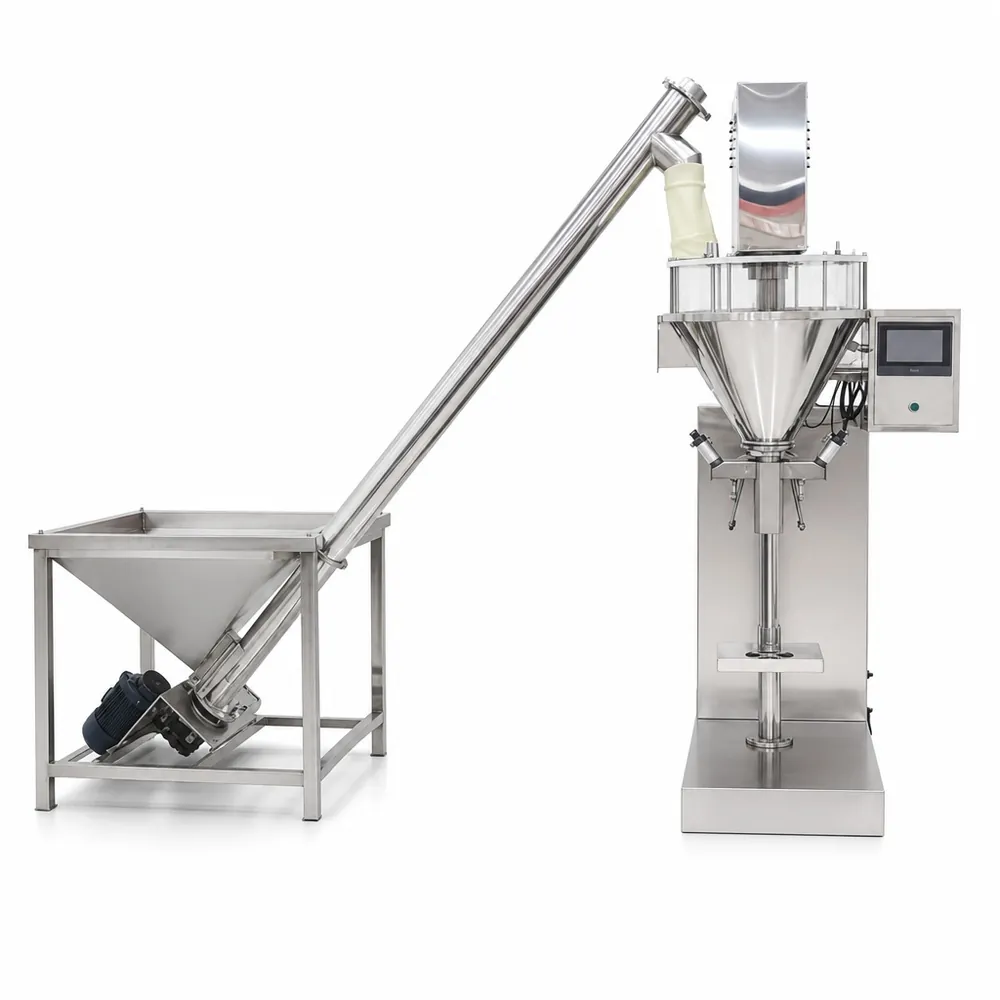
HC-02 is a semi-automatic powder dosing machine with servo-driven screw metering.
View details →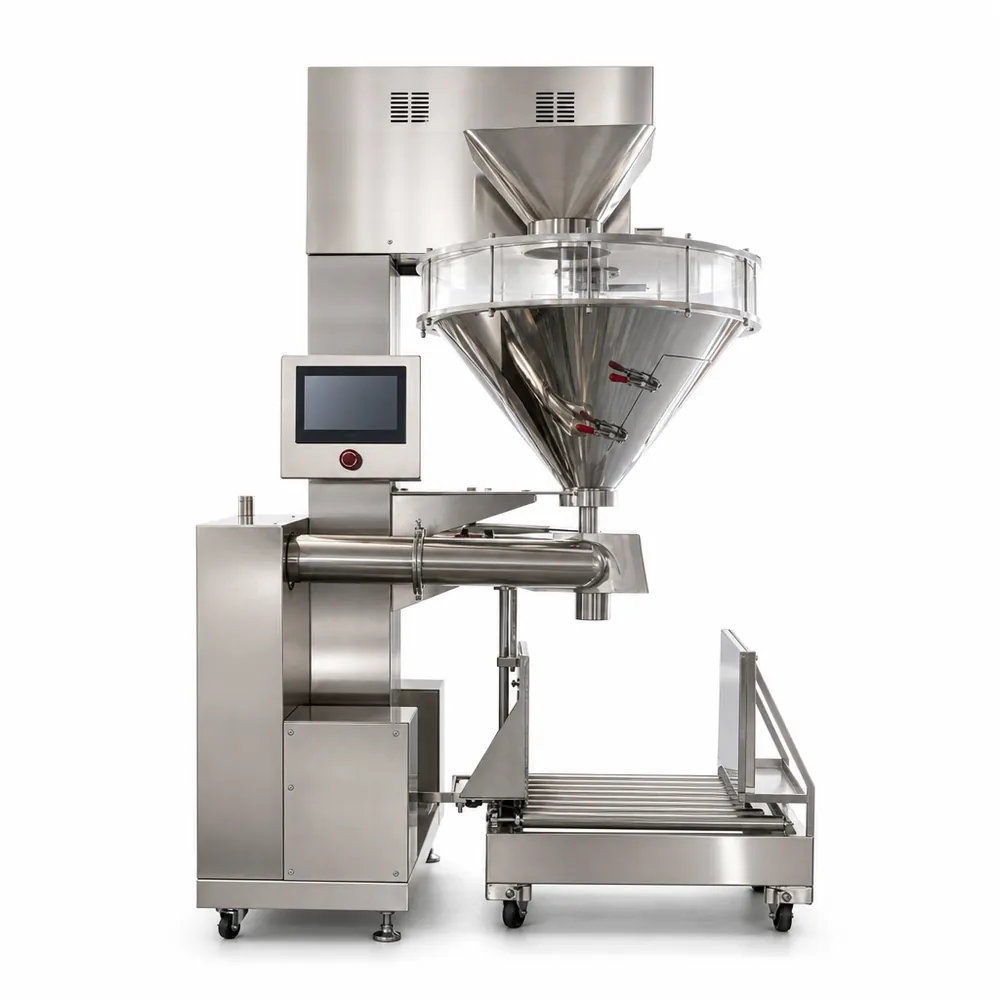
HC-03 is a powder filling machine with a dust-extraction arrangement. Filling / weighing range: 1kg – 10kg.
View details →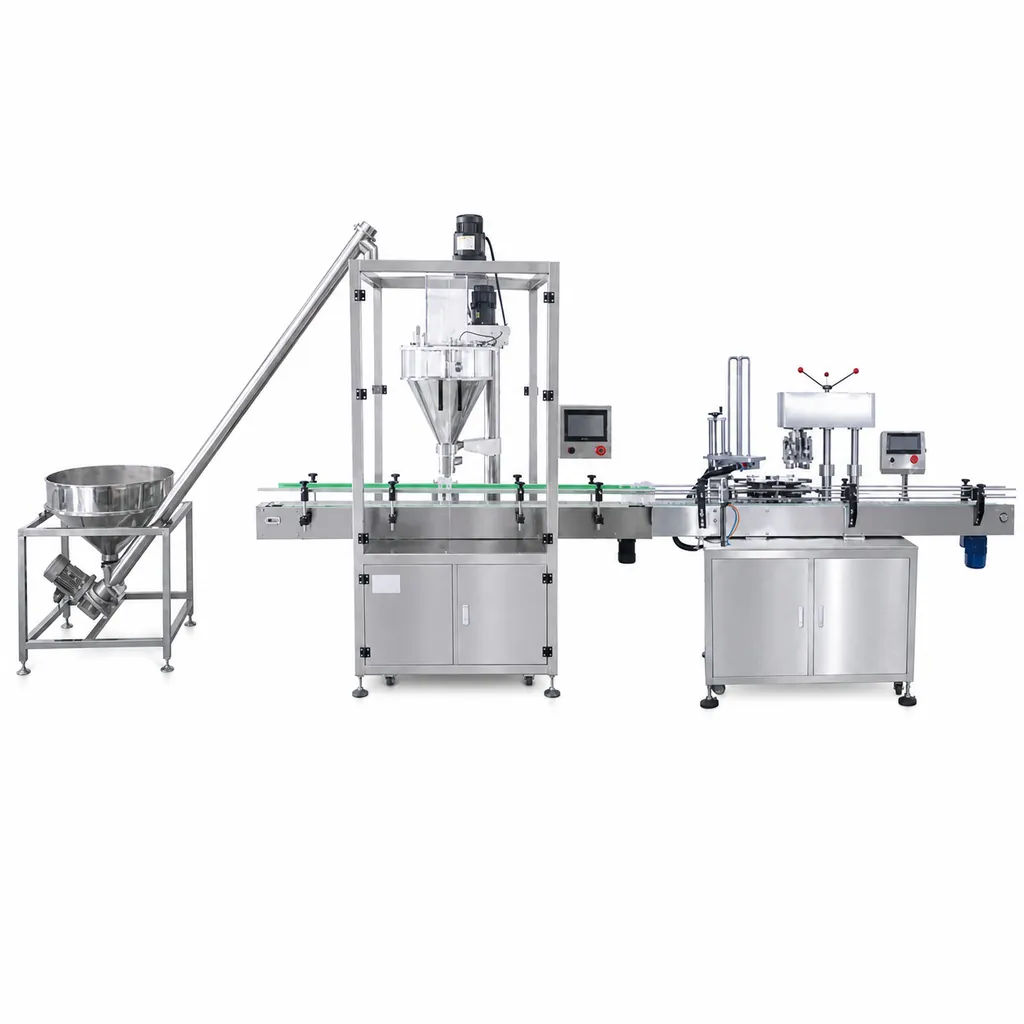
HC-FG combines servo auger powder filling with feeding, conveyor transfer and can seaming.
View details →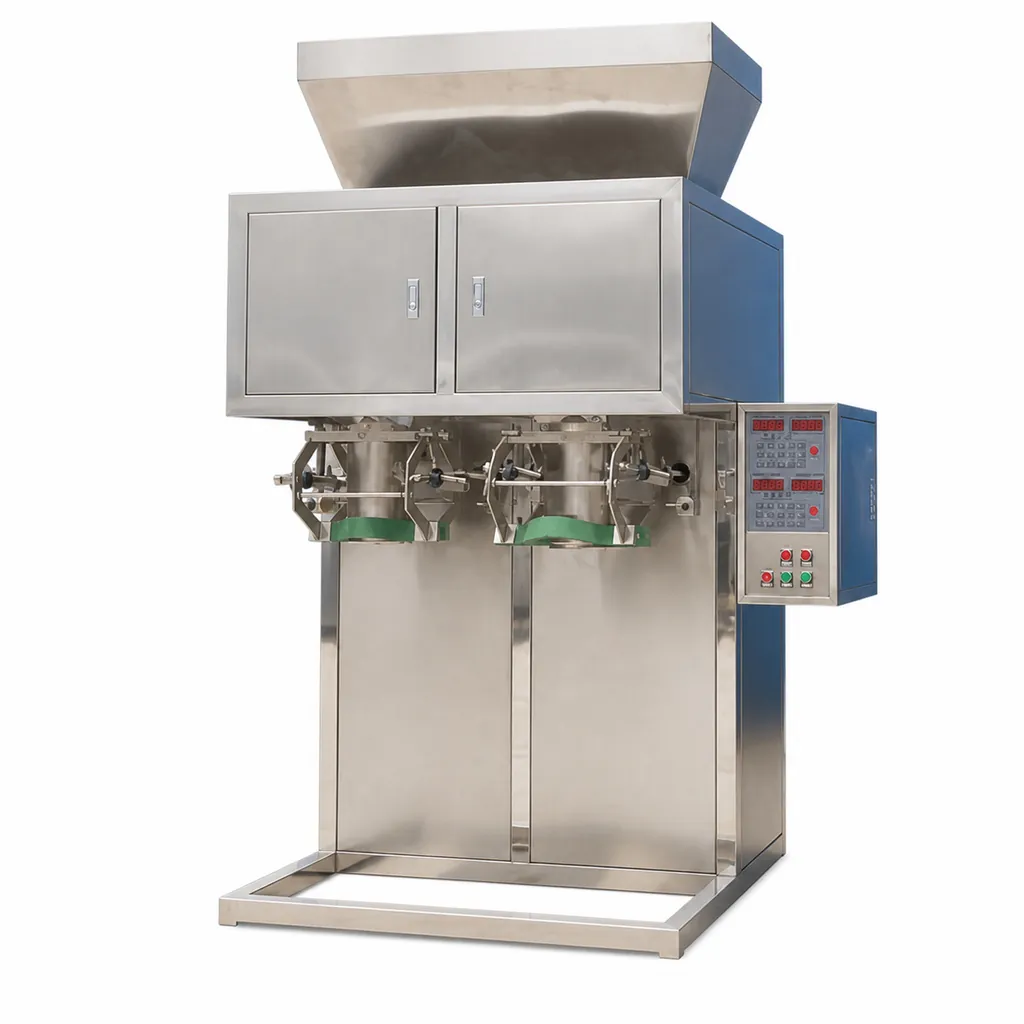
SH-2DGS-50F is a dual-auger powder bag filling machine. Suitable materials: Powder. Packaging: Open-mouth bag filling. Specifications include 4.7KW / 380 V, 6-16 bags/min, and 1 unit. Contact MUJIU to confirm the configuration for your application.
View details →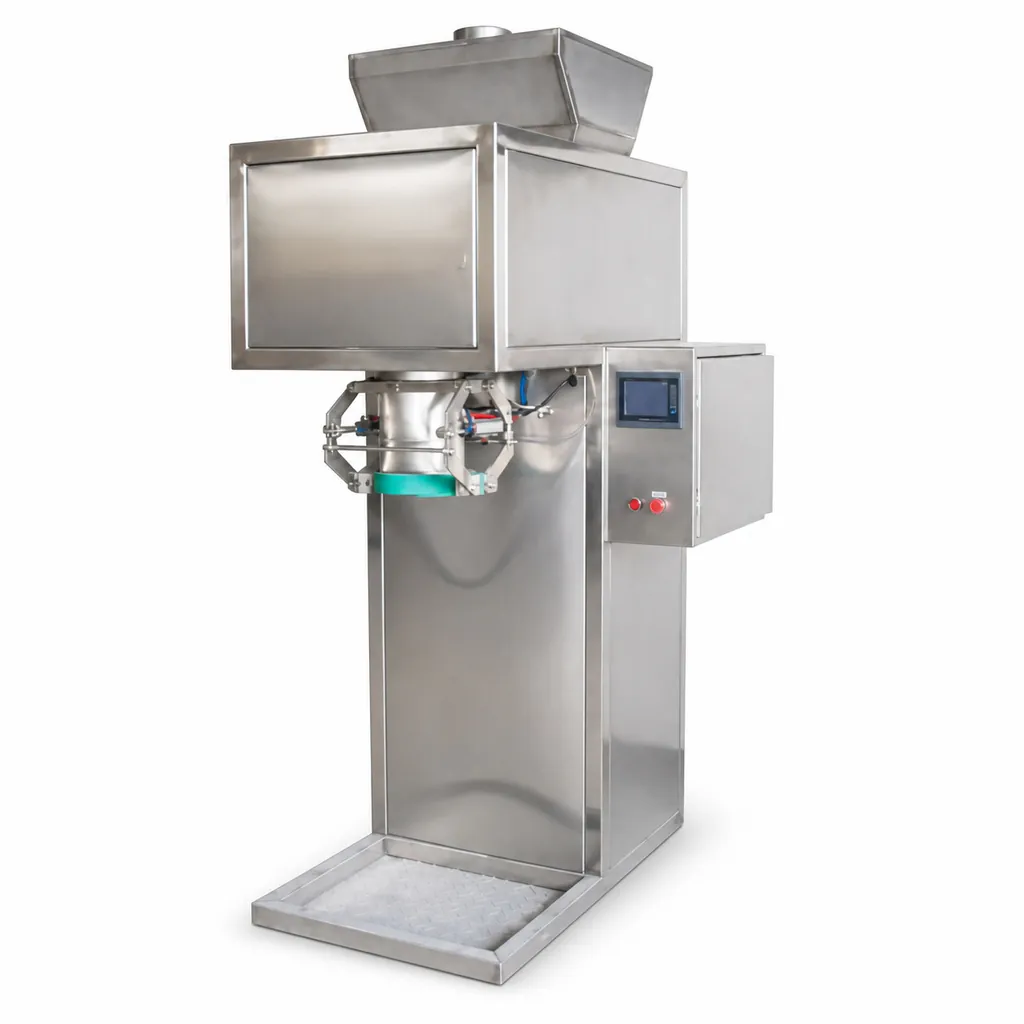
SH-DGS-10F is a single-auger powder bag filling machine. Suitable materials: Powder. Packaging: Open-mouth bag filling. Specifications include 1.7KW / 380 V, 3-10 bags/min, and 1 unit. Contact MUJIU to confirm the configuration for your application.
View details →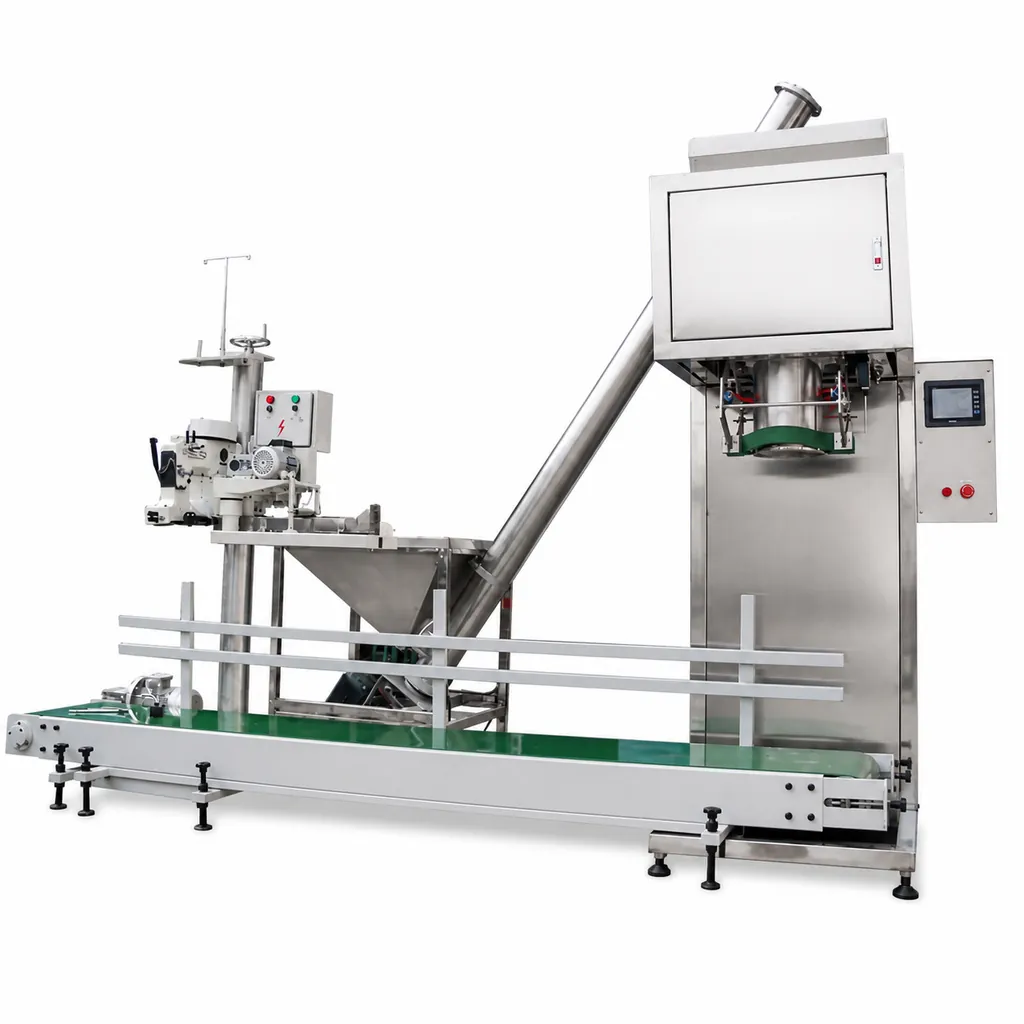
SH-DGS-50F is a single-auger powder bag filling machine. Suitable materials: Powder. Packaging: Open-mouth bag filling. Specifications include 2.5KW / 380 V, 3-8 bags/min, and 1 unit. Contact MUJIU to confirm the configuration for your application.
View details →Selection before specification
Powder dosing depends on how the material flows, compacts and creates dust, as well as the target weight and package.
Selection guide
Share your material, package and output target to narrow the configuration.
Record bulk density, particle size, moisture, flow, compaction and dust at the test condition.
Define target weights and the sampling method used to judge accepted packs.
Confirm opening dimensions, bag or container handling and the upstream feed boundary.
Define extraction, guarding, cross-contamination, cleaning and contact-material requirements.
Supply boundary
Common selection errors
Procurement FAQ
Provide bulk density with the measurement method, particle size, moisture, flow and dust behavior, target weight, package opening and cleaning requirements.
No. The choice depends on material flow, compaction, dust, target weight, package and test results. The category name is not enough to approve a method.
Agree on the sample, target range, number of observations, weighing method, startup exclusions and accepted-output rule before FAT.
Configuration input
Our team will use these details to recommend equipment for your application.